

Tile Reglazing: Can You Coat Over Damaged Grout?
A freshly reglazed tile wall can look smooth, bright, and renewed, but the finish is only as dependable as the surface beneath it. Grout often reveals problems before the tile does, including hairline gaps, crumbling joints, dark staining, loose sections, and areas that never fully dry. When failed grout is sealed under a new finish, the issue does not disappear; it becomes trapped beneath a surface that now must resist moisture, movement, and poor bonding conditions.
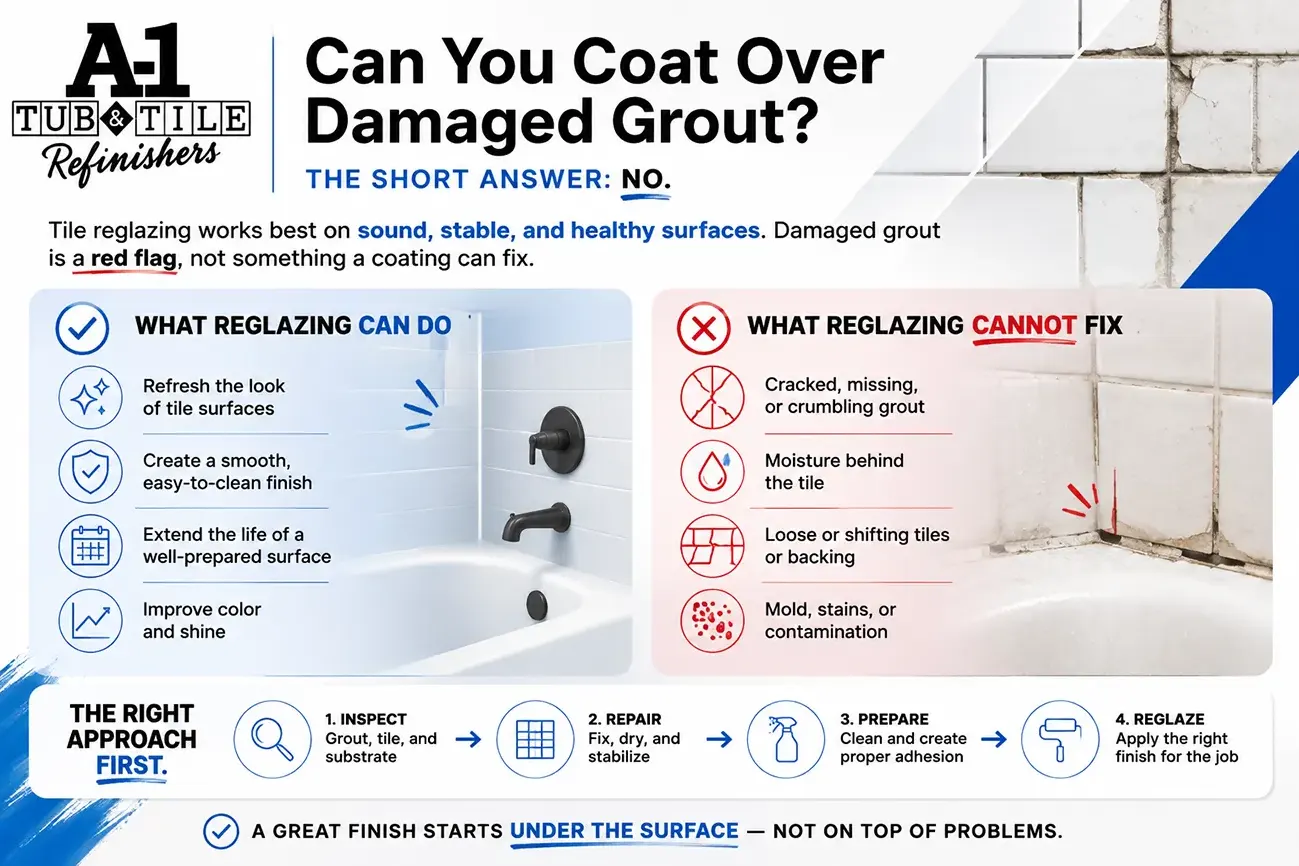
Tile reglazing should not be applied over damaged grout, failed joints, moisture intrusion, loose tile, or an unstable substrate. A new finish is designed to renew the visible surface, not rebuild missing grout, stop leaks, correct shifting tile, or stabilize the wall behind it. A-1 Tub & Tile Refinishers LLC treats preparation as the deciding step because adhesion depends on clean, sound, dry, and stable surfaces before any finish is applied. When grout has broken down, or the tile assembly is moving, professional evaluation and surface preparation must come first.
Why Tile Reglazing Cannot Correct Damaged Grout
Tile reglazing is a surface finishing process, not a grout rebuilding method or a way to lock a loose tile assembly back into place. When grout is cracked, missing, powdery, recessed, or separating from tile edges, coating over it only hides the defect temporarily. The new finish may visually bridge small lines, but it cannot restore the packed joint or prevent moisture from migrating behind the tile. It also cannot compensate for movement in the wall, surround, or backing materials.
| Grout or substrate condition | Why it matters before reglazing |
| Cracked or missing grout | Open joints can hold moisture and residue where the coating needs a sound edge. |
| Loose or moving tile | Movement can stress the new surface film and lead to early cracking or separation. |
| Soft, stained, or deteriorated grout | Contamination and breakdown can interfere with adhesion and leave an uneven finished appearance. |
Moisture and movement matter because they continue affecting reglazing performance after the surface looks finished. Grout joints that retain moisture can trap contaminants, mildew residue, and mineral deposits in the same areas where the coating needs reliable contact. If the tile assembly shifts, flexes, or separates from the backing, that movement can stress the new finish and create cracking, peeling, or edge failure. Warranty language in the refinishing industry often draws a practical line between workmanship-related coating failure and underlying site conditions that no coating can correct. Many warranties cover refinished fiberglass fixtures, wall tiles, and bathtubs for peeling and adhesion issues caused by workmanship, while excluding constantly wet surfaces, dripping or leaking plumbing, and cracks caused by substructure movement. Those exclusions matter because they identify the same risks that damaged grout often signals: active moisture, unstable backing, and movement behind the visible surface. They support the grout-readiness and substrate-readiness standard by showing that adhesion depends on conditions beneath the finish, not only on the coating itself. For that reason, inspection, repair planning, drying, cleaning, and professional preparation must come before tile reglazing.
What Must Be Addressed Before Tile Reglazing
Before tile reglazing begins, the tile field has to be evaluated as a complete surface system, not just as a color or gloss problem. Failed grout is one of the first warning signs because it can point to water entry, tile movement, or deterioration behind the visible surface. If a new finish is applied over crumbling, missing, deeply cracked, or loose grout, the coating may look uniform at first. The problem remains active beneath the finish and can shorten the life of the reglazed surface.
- Grout joints with gaps, powdering, separation, or dark moisture staining
- Tiles that shift, sound hollow, or show edge movement under pressure
- Areas where moisture may be trapped behind the tile assembly
- Soap film, mineral buildup, body oils, mildew residue, or embedded contaminants
- Caulk lines, corners, and transitions that suggest leakage or recurring dampness
Surface cleanliness also has to be assessed beyond what is visible. Shower walls and tub surrounds often carry layers of residue that interfere with adhesion, especially around grout lines where buildup collects unevenly. Professional preparation is not simply about making tile look clean; it is about creating a receptive surface so the new finish can lay down evenly and bond consistently. Corners, lower wall sections, shelves, niches, and plumbing-adjacent areas often reveal whether moisture has been managed or merely hidden.
The substrate must also be steady enough to accept a renewed finish. If tiles are loose, backing materials are compromised, or water has softened the assembly, reglazing should not be treated as a means of locking everything in place. A finish can refresh a prepared surface, but it cannot reinforce a failing wall or correct movement beneath the tile. The evaluation should separate cosmetic wear from underlying failure so reglazing is performed only after the surface can support it.
Why Grout Readiness Comes Before Reglazing
Damaged grout should not be coated over during tile reglazing because a new finish is designed to bond to a sound, prepared surface. Crumbling joints, trapped moisture, loose tile, and movement behind the assembly create conditions that a coating cannot correct. The condition of the grout lines, the stability of the tile field, the presence of leaks or chronic dampness, and the strength of the underlying substrate all determine whether refinishing can perform as intended. Skipping preparation can turn a cosmetic upgrade into a short-lived surface failure.
A grout-first approach protects the appearance, adhesion, and durability of the renewed finish. Cracked, missing, powdery, moisture-stained, or separating grout should be reviewed before coating work is considered appropriate. The proper sequence is assessment, correction of surface-readiness concerns, professional preparation, and then reglazing only where the tile assembly can support the finish. That order helps prevent hidden failures from being sealed beneath a new surface.