


New Jersey Bathtub Surface Problems to Repair Before Reglazing Starts
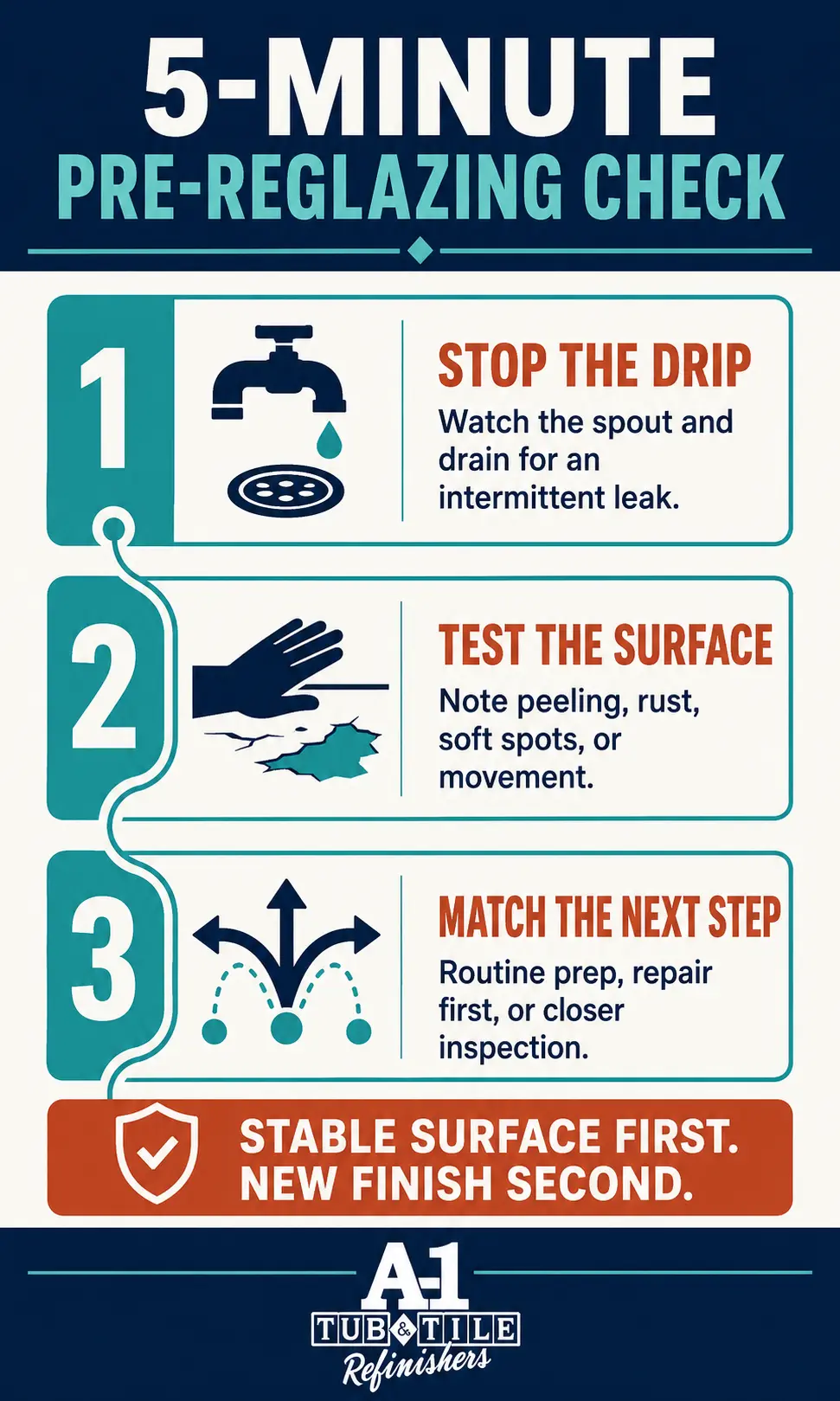
A glossy new finish cannot hold a damaged bathtub together. Peeling coating, rust around the drain, or a soft fiberglass floor may signal trouble beneath the visible surface. Covering the symptom without correcting its cause leaves the new coating attached to the same weak material. The first decision is whether the tub needs routine preparation, a surface repair, or additional work before reglazing begins.
A suitable reglazing candidate has a stable base, repairable surface damage, and no active plumbing problem affecting the fixture. The tub material matters because porcelain-coated metal behaves differently from fiberglass or acrylic. At A-1 Tub & Tile Refinishers, we evaluate those conditions before matching the preparation method to the tub. That assessment protects the bond beneath the new finish, where many preventable failures begin.
The New Finish Depends on the Surface Beneath It
The coating cannot replace a stable substrate. Preparation determines what the primer and finish will actually contact. A 2023 peer-reviewed study in Materials found that surface preparation significantly affected coating adhesion and microstructure in the tested system. The researchers studied cold-sprayed nickel rather than bathtub glaze, but the fundamental adhesion principle still applies. A new film can only bond reliably to the surface beneath it, including any loose finish, contamination, or corrosion left in place.
How an old coating peels can also help us understand its previous preparation. In our field experience, a finish that lifts in broad sheets often points to a weak or missing primer layer. Material that releases in smaller chips may have a stronger bond beneath it. We still test the remaining surface instead of making the decision by appearance alone. The goal is to remove every unstable layer and build the new finish on a properly prepared, primed surface.
Use the Defect to Choose the Next Step
Visible bathtub damage does not lead to one standard repair. A shallow porcelain chip has a different meaning from a crack that opens when someone steps into a fiberglass tub. Surface stains and limited rust can often be addressed during professional preparation, while a dent represents deformation of the tub itself. The condition and behavior of the damaged area determine the appropriate next step.
| What you see | What we need to determine | Best next step before reglazing |
| Dull finish or light scratches | Whether wear is limited to the surface | Clean, prepare, prime, and refinish after inspection |
| Small chip or pit | Whether the damage is localized and stable | Fill and level the damaged spot before coating |
| Orange rust near a chip or drain | Whether metal is exposed or a drip is active | Correct the water source, remove corrosion, and rebuild the area |
| Prior coating peeling in sheets | Whether the old finish lacks a dependable bond | Remove unstable material and test the remaining layers |
| Hairline mark in a firm surface | Whether the mark is cosmetic or extends deeper | Evaluate its depth and repair it if the base remains stable |
| Soft floor or crack that moves | Whether the shell or support has failed | Investigate and stabilize the tub before coating |
The practical dividing line is often movement. Fixed cosmetic damage may be repaired as part of the refinishing process. A crack that shifts under pressure continues loading the repaired spot and the finish above it. No topcoat can correct that mechanical condition, so stabilization must come first.
Stop Plumbing Drips Before Repairing the Finish
Small plumbing defects can damage a tub before a homeowner realizes there is a problem. On a recent Maplewood job, our technician noticed an active faucet drip that the homeowner had not seen. We paused the refinishing work so the plumbing could be corrected first because repeated water near the drain would threaten the new finish. That decision protected the homeowner’s investment and prevented a cosmetic repair from covering an active cause of damage. The tub was addressed only after the area was ready to support the work.
Slow drips are easy to miss because they may stop while someone is watching. Water repeatedly striking the same area can gradually wear the finish and expose the metal beneath porcelain. Rust near the drain may therefore be more than an isolated surface spot. Before the appointment, watch the spout and drain area for several minutes and report even an intermittent drip.
Peeling Coatings and Rust Must Leave the Bonding Path
A coating that bubbles or peels has already separated from the layer beneath it. New primer placed over that weak film would attach to the failing coating instead of the tub. A 2023 surface-preparation report sponsored by the Minnesota Department of Transportation found that effective overcoating preparation removed loose rust and existing coatings that had lost adhesion. The report concerns bridge steel, but its maintenance lesson applies to a porcelain-coated steel tub. Unstable material and active corrosion do not become sound simply because another coating covers them.
Drain edges, overflow openings, and chipped rims require close attention because they experience repeated water exposure. Corrosion must be removed before the damaged area can be rebuilt and leveled. The remaining material also needs to be firm enough to support the repair. Treating both the exposed area and its cause creates a better foundation for the primer and finish.
Old coating removal also requires appropriate stripping methods and safety controls. The U.S. Environmental Protection Agency’s 2024 methylene chloride rule banned most uses of the chemical and specifically noted fatal exposures during bathtub refinishing. Homeowners should not experiment with aggressive paint strippers before a technician evaluates a peeling tub. Tell us whether the tub was refinished previously and whether anyone has already applied a remover. Those details help us plan a safer and more accurate preparation process.
Tub Material Changes the Repair Decision
Porcelain over cast iron or steel usually provides a rigid base. Common concerns include worn enamel, exposed metal, surface rust, chips, or failure of a previous refinished layer. Age alone does not disqualify the tub when its base remains firm. The repair plan should concentrate on unstable material and localized damage without disturbing the surrounding sound porcelain.
Fiberglass and acrylic require closer attention to flexing, earlier patches, and edge movement. Scratches and discoloration may remain at the surface, while a soft floor or spreading crack suggests a deeper problem. Identifying the material guides the cleaning, abrasion, filling, and priming methods. We confirm the tub type before selecting those steps instead of treating every white fixture as the same surface.
Three observations are especially useful when a fiberglass or acrylic tub is cracked:
- Note whether the crack opens, closes, or changes appearance when someone enters the tub.
- Identify any area that feels soft, springy, or lower than the surrounding floor.
- Report whether the same crack returned after an earlier patch or refinishing job.
Movement does not automatically require replacement, but it changes the order of work. The support problem or damaged laminate needs attention before a cosmetic repair receives a finish. Otherwise, a rigid-looking coating would sit over a surface that continues to bend. The crack could then reappear along the same stress point.
Send Clear Evidence Before Reglazing Day
Good photographs help us identify repair questions before arriving. Begin with a complete view of the tub so the damage has context. Add close views that show the edges and texture of each problem. The drain, overflow, caulk line, and plumbing fixtures should also be visible.
- Send one full view showing the tub, surround, faucet, drain, and general layout.
- Add close views of every chip, rust spot, crack, bubble, or peeling edge.
- Include a side-angle image showing raised coating, pits, or uneven earlier repairs.
State whether the tub has an old refinished coating and whether leaks or plumbing repairs affected the area. Photos support the initial evaluation but cannot replace a hands-on adhesion and movement check. Early disclosure helps us prepare for the actual condition instead of discovering a preventable issue on the scheduled workday. It also gives the homeowner a clearer understanding of the required repair scope.
Have the Surface Assessed Before Reglazing Day
Bathtub reglazing should begin with a stable, repairable surface rather than the first coat of primer. Chips, rust, and loose old coating require different preparation from a soft floor or moving crack. Identifying plumbing defects and unstable material early protects the finished surface and prevents cosmetic work from covering a continuing problem. Send A-1 Tub & Tile Refinishers clear photographs and a short history of previous coatings, repairs, leaks, and movement. Contact us to determine whether your tub needs routine preparation, a localized repair, or closer inspection before refinishing.