

When Is Bathtub Painting a Better Choice Than Replacement?
You may love the depth of your bathtub, the room it gives you to stretch out, and how it fits with the tile you chose. But its faded color or worn finish may be the part you want gone. Bathtub Painting lets us update the surface of a suitable tub without changing those features you want to keep. It cannot lower the side, move the drain, or make the bathing area larger. At A-1 Tub & Tile Refinishers, we begin with that distinction so the work you choose addresses what actually bothers you.
When Keeping the Tub Makes Sense
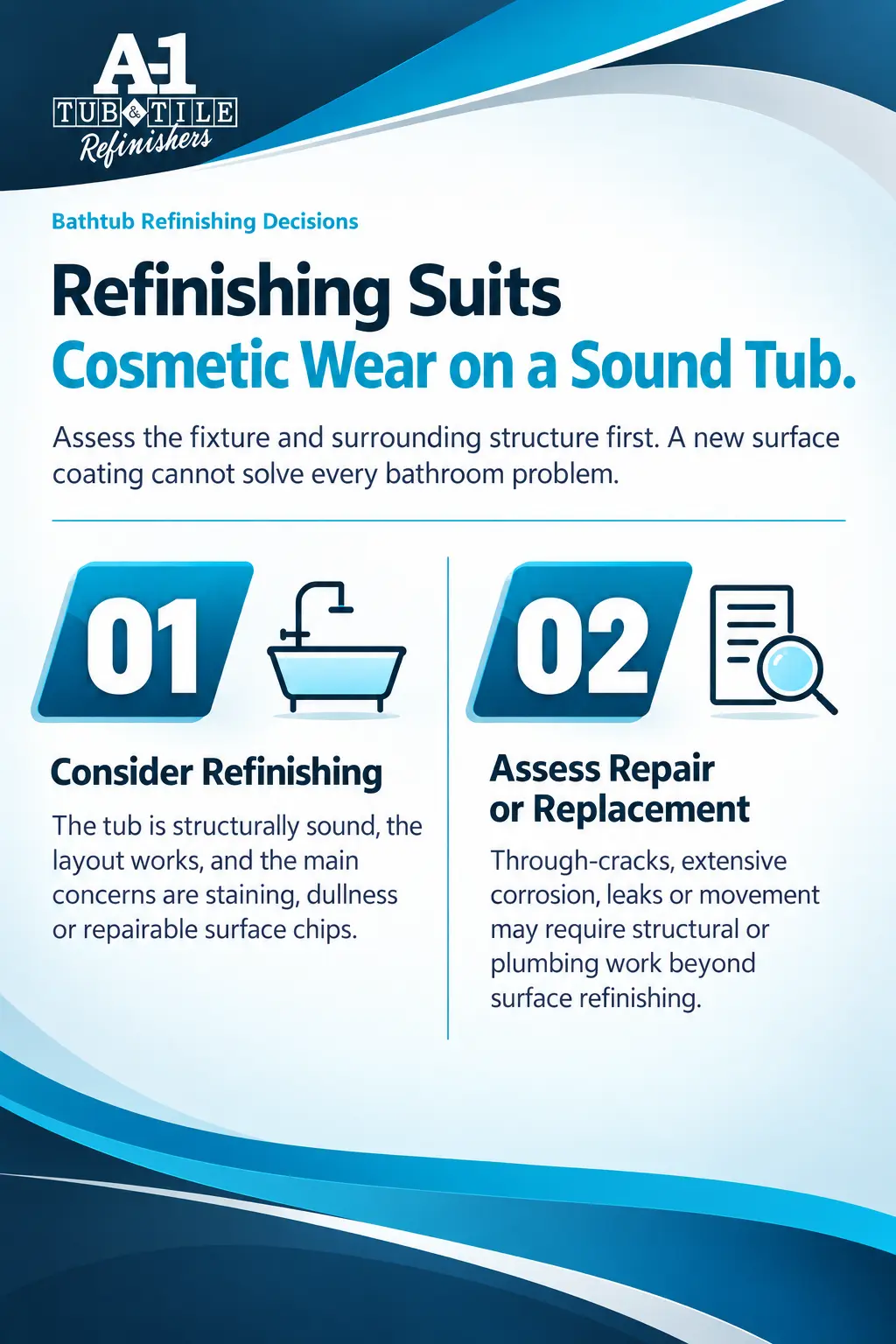
If you like using your bathtub but dislike how it looks, refinishing is worth considering. Imagine a bathroom with tile you still like, and a tub that fits the space comfortably, but the tub is an outdated pink or has a dull, worn-looking surface. Replacing it would mean removing a fixture that otherwise serves its purpose. Refinishing keeps that familiar bathroom arrangement and changes the part that bothers you. The key is that the tub must be suitable for refinishing; a new color can’t hide an underlying leak or support issue.
A small chip does not necessarily rule out keeping the tub. We repair chipped areas as part of appropriate refinishing work, and a previously refinished tub may also be a candidate for stripping and recoating. But a chip, a peeling older coating, and a crack that keeps returning are different problems. If you have had earlier repairs, tell us what happened and whether the problem came back. That history helps establish what needs attention before a new finish goes on.
Replacement makes more sense when the tub itself is wrong for you. If you want a different size, a different shape, or a new bathroom layout, refinishing cannot provide those changes either. We would rather help you make that distinction at the beginning than encourage a surface update that leaves your main frustration untouched.
| What you want to change | Where to begin |
| An unwanted color or worn finish on a tub you otherwise like | Consider refinishing after the tub’s condition is assessed. |
| A chip or peeling finish from an earlier refinishing job | Discuss repair or removal of the old coating before choosing the new finish. |
| A leak or a crack that keeps returning | Find out what is causing it before deciding whether to refinish or replace. |
| The tub’s height, size, shape, or position | Look at replacement or remodeling options that can change the fixture or layout. |
What Goes into the Finish You See
The new color is the visible part of refinishing, but the preparation underneath it matters just as much. In our refinishing process, we clean the surface, apply an adhesion primer, and spray on successive coats of finish. The primer helps the coating adhere to the prepared tub. Cleaning first matters because soap residue and other contamination can interfere with that bond. Applying a fresh coating over a dirty or failing surface would leave the problem underneath the new finish.
That is why an estimate needs to reflect your tub’s condition, not just its dimensions. A tub with an intact original finish is a different starting point from one with an older coating lifting around the drain. The second may need the failing finish removed before recoating. That additional preparation belongs in the discussion of the work, so you understand what you are paying for.
The same attention to scope matters when you compare refinishing with replacement. Suppose you’re comparing a refinishing estimate with the store price of a new tub. The new tub may also need removal of the old fixture, plumbing work, and repairs to surrounding finishes before the bathroom is usable again. Ask what the installed replacement estimate includes and what would be priced separately, then compare it with the full refinishing scope. Those extra changes may be worthwhile if they give you a tub you can use more comfortably. If you only want a new finish, find out how much work you’d have to do to get it.
Make Room for the Work and the Care Afterward
In a one-bathroom home, the first shower after the work deserves as much planning as the appointment itself. Finishing the application and being ready to use the tub are not the same moment. Let us know if this is your only bathing space, and plan around when we advise you can use the tub again. We also encourage proper care afterward, including gentle cleaning and keeping bottles and bath accessories off the refinished surface. These are everyday habits to consider before choosing refinishing, especially when several people share the bathroom.
- Tell us about the tub’s history. Mention earlier refinishing, repairs, peeling, or leaks, even if someone else did the work. A recurring problem deserves attention before it is hidden beneath another coating.
- Plan around the time before the tub can be used. Confirm the instructions for your appointment rather than assuming a surface that looks dry is shower-ready. Share the Plan with Everyone Using the Bathroom.
- Use a soft cloth or sponge and a nonabrasive, bleach-free cleaner we recommend. If a mark doesn’t lift with gentle cleaning, don’t switch straight to a scouring pad. Abrasive scrubbing can damage the finish you are trying to clean.
- Keep shampoo bottles, soap, and bath accessories off the tub’s finish. Use separate storage, and follow our guidance on mats and suction cups so water doesn’t get trapped against the coating.
- Keep the care instructions where other people can find them. A family member or house cleaner may reach for a familiar abrasive product without realizing the tub has been refinished. Agreeing on the cleaner and sponge avoids that mix-up.
Get an Estimate for the Tub You Want to Keep
If your tub still suits your bathroom and its condition supports refinishing, changing the finish can solve the appearance problem without replacing the fixture. If you need a different tub or have an unresolved leak, address that first. Call A-1 Tub & Tile Refinishers at 908-705-2999 for a free, no-obligation estimate. Please tell us what bothers you about the tub and what you want to keep, so we can discuss whether refinishing is the right next step.