

What Determines How Long Tile Reglazing Lasts?
How long Tile Reglazing lasts depends on the condition beneath the coating, the preparation and application, the materials used, and what happens in the bathroom afterward. A well-applied finish in a lightly used guest shower faces different demands from the same finish in the household’s main bathroom. In our experience at A-1 Tub & Tile Refinishers, a properly applied tile coating can last more than 15 years, depending on use and maintenance. That is a possibility, not a warranty or a guaranteed lifespan. Heavy use or poor care can lead to earlier failure. Our part is preparing and refinishing suitable surfaces with professional workmanship and high-quality materials, then explaining how to care for them.
The Same Finish Can Have a Very Different Daily Life
To understand why one number cannot describe every bathroom, compare two ways the same wall tile might be used. In a guest bathroom, the shower may sit unused for days between visits. After a guest leaves, the tile gets a gentle cleaning, and bottles and accessories are put away. The finish encounters less soap residue, cleaning tools, and objects handled in the shower. When that light use is paired with good workmanship and proper care, the surface has favorable conditions for staying attractive over a long period.
Now consider the main bathroom in a family of six, including two young children. There may be several showers and baths in a day, more products to store and more cleaning to keep up with. A hard toy can be knocked against the wall, or someone may attack a stubborn mark with the scouring pad used elsewhere in the house. That creates more opportunities for scratches, chips, or surface wear. The problem isn’t that children automatically ruin a finish; it is that a busy bathroom demands more of the surface and needs a care routine everyone can follow.
An occasional-use bathroom is not protected simply because it is quiet, either. A harsh cleaner or an unresolved leak can still cause trouble there. Likewise, a heavily used family bathroom can be well cared for. Use matters because of what the surface experiences, not because a certain number of people subtracts a fixed number of years. If a finish begins to look discolored or chipped sooner than expected, the appearance alone cannot establish whether the cause was preparation, impact, cleaning, residue, or another condition.
Long Service Starts Before We Apply the Finish
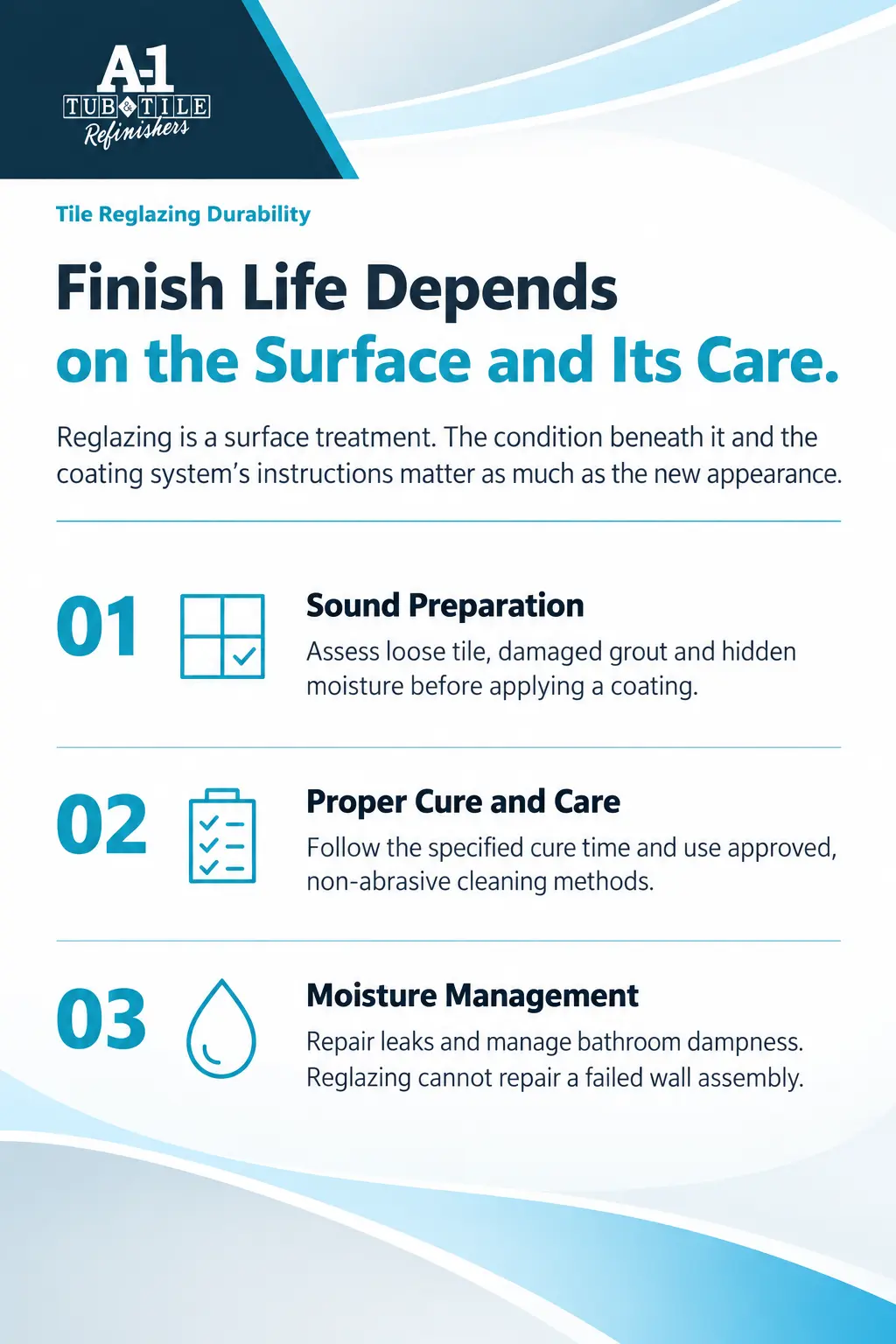
For tile that is firmly in place but an unwanted color, refinishing can change the appearance while keeping the existing wall. Loose tile, recurring cracks, or a leak require a different conversation. Coating the face of a tile does not repair whatever is allowing it to move or water to get behind it. You need to understand and address those problems before you can expect a new finish to perform well. Tell us about them when discussing the work, including any repairs already attempted.
On a suitable surface, our process includes cleaning the tile, applying an adhesion primer, and spraying successive coats of Ultra Glaze. Cleaning removes contamination that could interfere with the coating’s grip; the primer helps the finish adhere to the prepared surface—the coating and the application work together. A professional material can’t fix residue left underneath it, and careful preparation cannot make an unsuitable product right for every use.
The person doing the work matters for these reasons, not simply because the job is called professional. Someone must recognize an old coating that is failing, deal with the surface condition, and apply the refinishing system correctly. A shiny result on the day of application does not reveal every part of that work. When choosing a refinisher, look beyond the color and ask how they’ll handle the existing finish and any damaged areas. We use a refinishing coating as part of a preparation-and-application process, rather than treating the job as a quick coat of ordinary wall paint.
Be specific about the surface you want refinished. This discussion concerns bathroom wall tile, including shower walls, not a promise about every shower floor, countertop, or other tiled surface. Different uses expose a finish to different demands. The expected result needs to match the actual area being coated.
| What affects longevity | What it means in your bathroom |
| The existing surface | An attractive coating cannot correct loose tile or an unresolved leak underneath it. |
| Preparation and application | Cleaning, adhesion, and handling an older failing finish affect how the new coating holds on. |
| The coating used | The material must suit the surface and how the surface will be used. |
| Daily use and maintenance | Cleaning tools, impacts and residue all matter; household size alone does not predict a failure date. |
Care That Fits a Bathroom People Actually Use
Good maintenance should not mean being afraid to use your shower. It means making gentle care the easy option. In a busy home, that might mean keeping the recommended cleaner and a soft sponge together, placing bottles where they will not rub against the finish, and making sure everyone knows which products to avoid. We explain the care your refinished surface needs so you are not left guessing after the work. Build those instructions into the routine from the beginning, rather than waiting until a mark appears and trying the strongest cleaner in the cupboard.
- Let the finish cure before using the shower. Follow the timing given for your job, including when the tile can first get wet. A surface can look finished before it is ready for daily use.
- Clean with a soft cloth or sponge and the nonabrasive cleaner we recommend. A scouring pad may remove a mark but can also scratch the finish. Keep abrasive powders and rough cleaning tools out of the routine.
- Remove soap residue with regular, gentle cleaning. Waiting until buildup becomes stubborn can tempt someone to scrub harder or try a harsher product. If the recommended method does not remove a mark, ask us before escalating.
- Keep hard objects from knocking or rubbing against the coating. In a family bathroom, think about where toys, bottles, and cleaning tools are stored. The aim is to reduce avoidable impacts, not to make the room unusable.
- Share the instructions with everyone who cleans the bathroom. A house cleaner, relative, or tenant may use a different product without knowing the tile was refinished. Make the approved supplies easy to identify and keep the instructions accessible.
- Treat a new leak or moving tile as a problem to investigate. Don’t assume covering a damaged spot with more paint will solve what caused it. Find out what is happening beneath or around the finish first.
Choose the Work and the Care Together
A seldom-used guest shower and a family bathroom may start with the same refinishing system, but they do not put the coating through the same use. Whether a coating lasts more than 15 years depends on proper application and the use and care it receives afterward; it is not a guarantee for every bathroom. Sound tile, suitable materials, and careful preparation and application set the finish up for success. Afterward, the cleaning products, impacts, and moisture problems it encounters help determine how it holds up. Before booking, decide where you’ll store bottles and toys and which cleaner everyone will use, rather than treating the number of years as something the coating alone can deliver.
For a free, no-obligation estimate on your wall tile, call A-1 Tub & Tile Refinishers at 908-705-2999. Tell us whether this is an occasional-use shower or the household’s main bathroom, and mention any loose tile, peeling finish, or leaks. We can discuss what needs attention before refinishing and the care instructions everyone using or cleaning that bathroom will need to follow.