

Bathroom Tile Color Trends And What They Mean For Tile Painting
Bathroom tile trends are changing because homeowners want bathrooms that feel cleaner, warmer, and more current. In many homes, the tile itself still works. The surface is solid. The layout is usable. The problem is the color.
A bathroom with usable tile can still look worn out when the tile is 1950s pink, yellowed white, heavy beige, or flat gray. Those colors can make the whole room feel dated, even when the tile itself is still in good condition.
Tile painting gives homeowners a way to change the bathroom color without rebuilding the room. The goal is to choose a finish that makes the bathroom feel cleaner, more modern, and better aligned with the homeowner’s personal style.
What Bathroom Tile Colors Are Modern Right Now?
Modern bathroom tile color isn’t about a single correct shade. The best color depends on how the homeowner wants the bathroom to feel. Some people want bright and clean. Others want warm and calm. Others want subtle color without making the room feel busy.
The larger color trend supports that shift. Kitchen & Bath Design News reported that 2026 color trends are staying warm, with neutral beige tones, warm taupes, dusty greens, and subtle earthy shades gaining attention in kitchen and bath design. The report also described homeowners as leaning into natural tones for both calm and energy.
Tile painting gives homeowners the freedom to move away from an outdated tile color and choose a finish that fits the bathroom they want now.
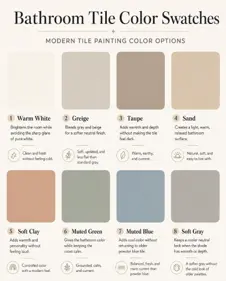
Warm White
Warm white gives bathroom tile a clean, bright look without the hard glare of pure white. This color works well in small bathrooms because it reflects light while keeping the room from feeling sterile. It also pairs well with chrome, brushed nickel, matte black, wood accents, and neutral flooring.
Warm white feels modern because it gives the bathroom a fresh look without making every surrounding detail feel sharp. Designers and paint specialists continue to point to warm whites as versatile choices because they balance brightness with softness, especially in rooms where cooler whites can feel harsh.
Greige
Greige blends gray and beige, which makes it useful for homeowners who like neutral bathrooms but want to move away from cold gray tile. Gray has had a long run in bathrooms, but many gray bathrooms now feel flat, especially under LED lighting or in rooms with little natural light.
Greige feels modern because it keeps the clean look of gray while adding warmth. It works with chrome fixtures, black hardware, white tubs, beige floors, and warmer wall paint. Design color guidance for 2025 also points to greige and taupe as warm neutral choices that keep rooms calm without looking cold.
Taupe
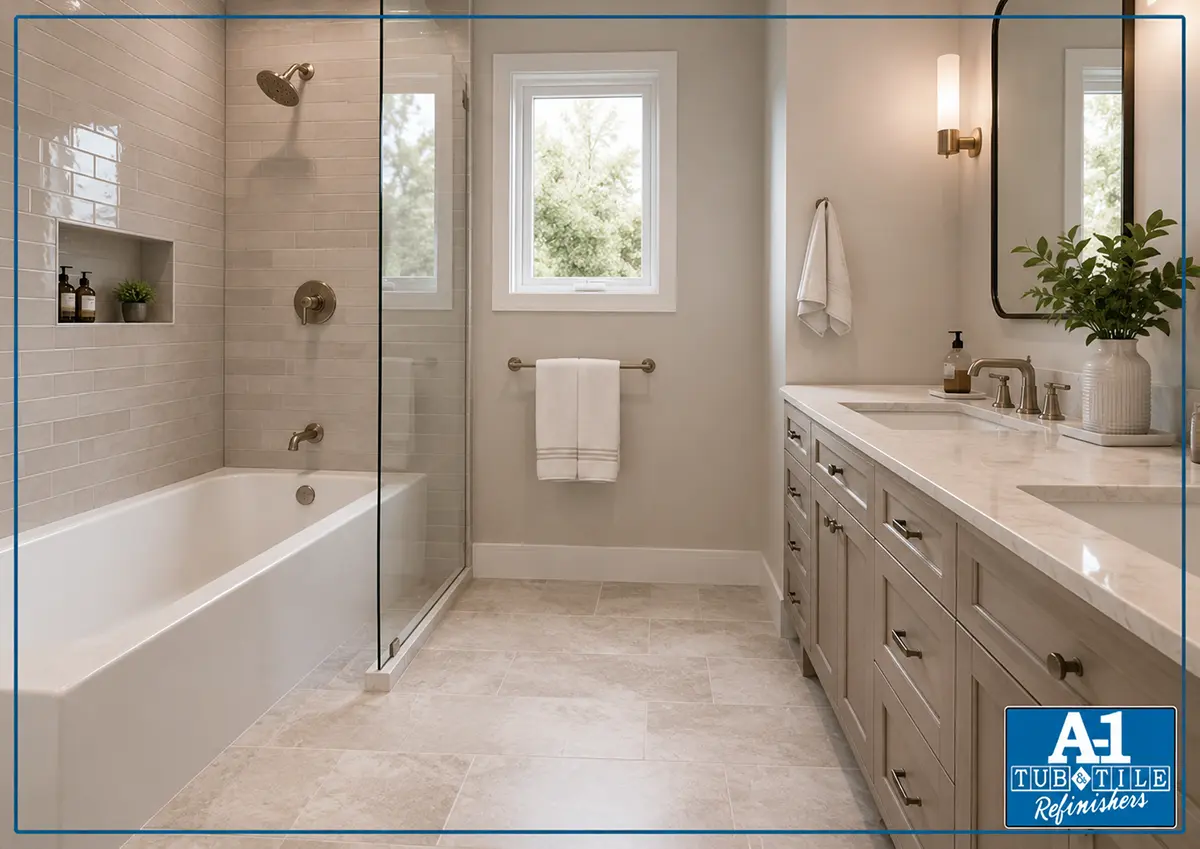
Taupe gives bathroom tile warmth and depth without making the room feel dark. It is softer than gray and more finished than plain beige. In an older bathroom, taupe can make the tile color feel intentional instead of dated.
Taupe feels modern because it aligns with the trend toward warmer, earthier neutrals. It works well with white fixtures, cream tones, brushed metals, and natural accents. Kitchen and bath color trend coverage for 2026 specifically points to warm taupes and subtle earthy shades as part of the current move toward softer, grounded interiors.
Sand
Sand tones create a lighter, warmer bathroom without using a bold color. This color family works well for homeowners who want the space to feel clean, relaxed, and simple. It softens the look of tile while still keeping the bathroom bright.
Sand feels modern because it avoids both the coldness of gray and the sharpness of bright white. It works well with neutral floors, white trim, simple fixtures, and soft lighting. Bathroom trend coverage for 2026 points to sand, beige, terracotta, olive green, dusty pink, and soft browns as part of a warmer, natural palette.
Soft Clay
Soft clay adds warmth and personality without repeating the heavy pink, peach, or beige tile colors found in many older bathrooms. It gives the room color, but the color still feels controlled.
Soft clay feels modern because it brings warmth to the bathroom in a cleaner, more intentional way. It works best when the homeowner wants the bathroom to feel more personal than white or gray, but not loud or overly decorated. Current bathroom color trend coverage includes terracotta, dusty pink, and related warm natural tones, which supports soft clay as a modern color direction rather than an old-fashioned pink or peach repeat.
Muted Green
Muted green works for homeowners who want color without making the bathroom feel too busy. Sage, eucalyptus, and soft olive tones give the tile personality without turning the room into a bright color statement.
Muted green feels modern because it gives the bathroom a softer, more grounded look. These greens pair well with white fixtures, warm metals, wood accents, and natural-looking accessories. Kitchen & Bath Design News specifically mentions dusty greens as part of the warmer, calmer color movement for 2026.
Muted Blue
Muted blue adds color to the bathroom while keeping the room relaxed. Dusty blue, blue-gray, and soft coastal blue tones feel more current than older powder blue tile because they look more balanced and less sweet.
Muted blue works well for homeowners who want a clean bathroom with a little more personality. It pairs with white fixtures, chrome, brushed nickel, soft gray walls, and warmer accent colors. Bathroom color trend coverage for 2025 included blues and greens as popular bathroom color families, especially when used in calmer, more balanced ways.
Soft Gray
Soft gray still works, but it needs warmth, depth, or the right surrounding finishes. The colder gray bathrooms from the last decade often feel flat now, especially in small rooms with overhead lighting.
Soft gray feels modern without making the bathroom feel cold. It works best for homeowners who still prefer cooler interiors but want a more balanced finish than older gray tile styles. The key is choosing a softer gray rather than a flat, cold gray that makes the room feel dated.
Bathroom Tile Color Trend Recap
The color options above show the level of control tile painting gives homeowners. Each shade creates a different result, so the right choice depends on the look, warmth, brightness, and personality the homeowner wants from the finished bathroom.
| Color Option | What It Does for the Bathroom | Why it Feels Modern |
| Warm White | Brightens the room while avoiding the sharp glare of pure white. | It keeps the bathroom clean and fresh without making it feel cold. |
| Greige | Blends gray and beige for a softer neutral finish. | It moves away from flat gray while still looking clean and up to date. |
| Taupe | Adds warmth and depth without making the tile feel dark. | It fits the current move toward warmer, earthier neutrals. |
| Sand | Creates a light, warm, relaxed bathroom surface. | It supports the shift toward softer natural color palettes. |
| Soft Clay | Adds warmth and personality without feeling loud. | It brings color into the room in a controlled, current way. |
| Muted Green | Gives the bathroom color while keeping the room calm. | Dusty greens and soft olive tones feel grounded and current. |
| Muted Blue | Adds cool color without reverting to the older powder-blue tile. | Dusty blue and blue-gray feel fresh, balanced, and more current. |
| Soft Gray | Keeps a cooler neutral look when the shade has warmth or depth. | It updates gray tile without the flat, cold look of older gray palettes. |
Choose A Bathroom Tile Color That Fits Your Style
Bathroom tile paint color trends give homeowners useful direction, but they should not take away personal choice. Warm white, greige, taupe, sand, soft clay, muted green, muted blue, and soft gray all create different results. Some make the room brighter. Some make it warmer. Some add color without making the bathroom feel busy.
If the tile color no longer fits the bathroom, tile painting lets homeowners choose a more modern finish. A-1 Tub & Tile Refinishers can help update existing bathroom tile with a new color that complements the room, lighting, and the homeowner’s style.